How to Actually Get Rid of Sciatica Pain (Without Spending a Fortune on Treatments)
I’ll be honest with you – sciatica is one of those conditions that can completely derail your life. That shooting pain down your leg? The numbness that makes you wonder if something’s seriously wrong? I’ve seen countless people struggle with it, and the frustration is real.
But here’s what most people don’t realize: you don’t need expensive treatments or scary procedures to beat sciatica. What you need is the right approach, done consistently.
Let’s Talk About What’s Actually Happening in Your Body
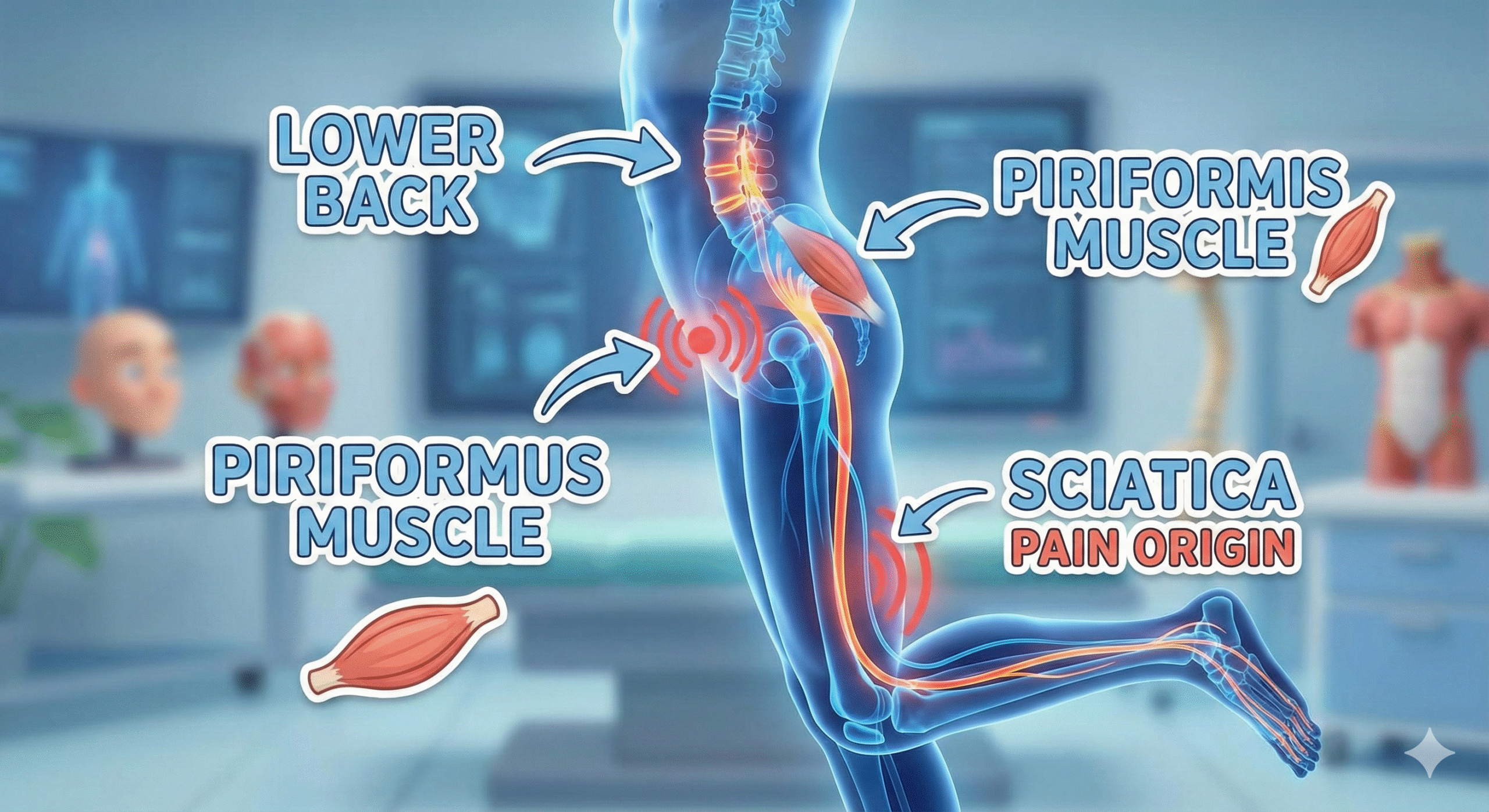
Your sciatic nerve is basically the longest nerve highway in your body. It starts way up in your lower back, runs through your butt (yeah, that’s the technical term!), travels down the back of each leg, and ends up in your feet. When something squeezes or irritates this nerve, you get sciatica.
So what’s doing the squeezing? Usually, it’s one of two culprits:
A herniated disc that’s pressing on the nerve root, or an inflamed muscle (often the piriformis) that’s pinching the nerve as it passes through your hip area.
The result? Pain that can range from annoying to absolutely unbearable. You might feel sharp shooting pains, weird tingling sensations, numbness, or even weakness in your leg. Some people tell me it feels like an electric shock running down their leg. Not fun.
Here’s My 3-Step Game Plan That Actually Works
Look, I’m not going to sugarcoat this – recovering from sciatica takes some effort. But these three steps have helped so many people get their lives back. The key is starting where you’re at and progressing gradually.
Step 1: The Sideline Trick (Start Here If You’re Really Hurting)
When your nerve is screaming at you and even small movements make things worse, this is where you begin.
Grab a bath towel and roll it up nice and tight. Now lie on your side – make sure the leg that’s giving you grief is on top. Slide that rolled towel under your waist. Just relax there for about 5 minutes.
What’s happening? You’re gently creating more space between your vertebrae on that side. Think of it like opening a door slightly – you’re giving that compressed nerve a bit more room to breathe.
I know it seems almost too simple, but trust me on this one. Do it 2-3 times a day when you’re in the worst of it.
Step 2: Wall Thrusts (Once Things Calm Down a Bit)
Okay, so your nerve isn’t quite as angry anymore. Time to start pushing that disc material back where it belongs.
Stand about two feet from a wall and put your elbows against it. Now here’s the important part – thrust your hips forward toward the wall. You’re arching your back here. When you feel a little pinch in your back, come back to where you started.
Do this 10-15 times, a few times throughout the day.
Why does this work? There’s something called the centralization principle – basically, you’re encouraging that herniated disc to move back toward the center and stop pressing on your nerve. It’s like coaxing toothpaste back into the tube (sort of).
One heads up: you might feel some discomfort. That’s normal. But if the pain shoots further down your leg, stop immediately. We’re trying to centralize the pain, not spread it around.
Step 3: The Wall Curl (Building Flexibility Back)
This one’s my favorite because people often feel immediate relief.
Stand facing the wall like you’re about to do a wall sit. Legs should be about shoulder-width apart. Now, start curling your spine from the top down. Let your head drop first, then your shoulders, then keep rolling down vertebra by vertebra.
Go as far as feels okay – don’t be a hero here. Come back up and repeat 8 times. Each time, try to go just a tiny bit deeper.
This creates space in your spinal canal and between those vertebrae. More space equals less pressure on your nerve. Simple as that.
Bonus Move: The Hip Dip (For Quick Relief)
Stand next to a wall with your painful leg closest to it. Now dip your hip toward the wall, creating a side bend. You should feel a stretch or release along that nerve path. Hold it for a few seconds, then come back.
Do this 6-8 times whenever you need quick relief. It’s especially clutch when you’ve been sitting too long.
Other Stuff That’ll Speed Up Your Recovery
The Temperature Game: Ice it for the first couple days when things are really inflamed (15-20 minutes at a time). After that, switch to heat to get blood flowing and relax those tight muscles.
Walk It Out: Short walks are your friend. Start with just 5-10 minutes and build up. Sitting around actually makes things worse, even though it might feel safer.
Fix Your Sleep Setup: Try sleeping on your side with a pillow between your knees. Or if you’re a back sleeper, stick a pillow under your knees. Both positions take pressure off your spine.
Watch What You Eat: Yeah, I know, diet advice is everywhere. But inflammation is inflammation, whether it’s in your joints or your nerves. Load up on fatty fish, berries, leafy greens, and turmeric. Skip the processed junk.
Get Off Your Butt (Literally): If you work a desk job, set a timer for every 30 minutes. Stand up, walk around, stretch. Sitting is probably the worst thing you can do for sciatica.
What Your Recovery Should Actually Look Like
First Two Weeks: You’re in survival mode. Focus on that sideline decompression, take short walks, and use ice when things flare up. Don’t push it.
Weeks 3-4: Start adding those wall thrusts and flexion stretches. Keep walking, maybe bump it up to 15-20 minutes. You should be feeling noticeably better by now.
Week 5 and Beyond: Keep doing all the exercises, but now add some gentle core work. Bridges, bird dogs, planks – whatever feels manageable. This is about building strength so this doesn’t happen again.
Most people see real improvement within 4-6 weeks. Full recovery? Give it 2-3 months. I know that sounds like forever when you’re hurting, but it beats surgery, right?
When You Actually Need to See a Doctor
Real talk – sometimes sciatica is a sign of something more serious. Get yourself to a doctor ASAP if:
- You lose control of your bladder or bowels
- Your leg is getting progressively weaker
- You’ve got numbness in your groin area
- Both legs are affected
- The pain is so severe you can’t function even with medication
These could be signs of cauda equina syndrome or other serious conditions that need immediate attention.
Keeping Sciatica From Coming Back
Once you’ve beaten this thing, you don’t want it coming back. Here’s your prevention checklist:
Keep doing some core exercises a few times a week. Your core muscles are like a natural back brace – use them.
Learn to lift properly. Bend those knees, keep your back straight. It’s not rocket science, but you’d be amazed how many people throw their back out lifting something stupid.
Watch your weight. Every extra pound is more pressure on your spine. I’m not saying you need to be a fitness model, but maintaining a reasonable weight helps.
Stay active. Your body was meant to move. Find something you enjoy – walking, swimming, yoga, whatever – and do it regularly.
Pay attention to your posture. Slouching at your desk all day is a one-way ticket to back problems.
Bottom Line
Sciatica sucks. There’s no way around that. But it’s not a life sentence, and you’re not helpless. These exercises work – but only if you actually do them consistently.
Start where you are, progress gradually, and be patient with yourself. Some days will be better than others, and that’s completely normal. Just keep showing up for yourself and doing the work.
Your sciatic nerve has an incredible ability to heal when you give it the right conditions. Create those conditions, stay consistent, and you’ll get through this. I’ve seen it happen hundreds of times, and you can be next.