Nipah Virus Cases Reported in India: A Detailed Situation Analysis
Overview
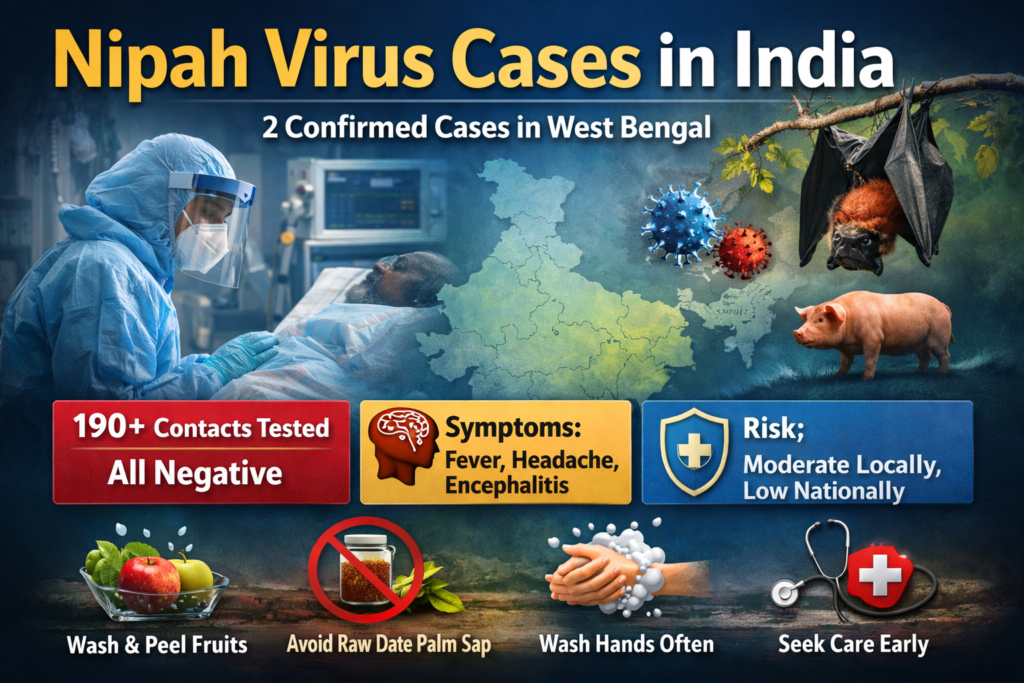
India has recently reported two confirmed cases of Nipah virus (NiV) in the eastern state of West Bengal, raising concerns among public health authorities while also highlighting the effectiveness of rapid surveillance and containment measures. Both cases involve health-care workers from the same hospital, prompting heightened monitoring but no immediate cause for widespread alarm.
According to official sources and the World Health Organization (WHO), the situation is currently under control, with no evidence of further spread beyond the identified cases.
Current Situation in West Bengal
Confirmed Cases
- Total confirmed cases: 2
- Location: West Bengal, India
- Affected individuals: Health-care workers from the same medical facility
Patient Condition
- One patient is currently receiving intensive care and remains under close medical supervision
- The second patient is clinically stable and recovering
Contact Tracing and Testing
- More than 190 close contacts have been identified and tested
- All test results are negative
- No new cases have been detected so far
Health authorities continue active surveillance to ensure early detection of any additional infections.
What Is Nipah Virus?
The Nipah virus (NiV) is a zoonotic virus, meaning it can be transmitted from animals to humans. It was first identified in 1999 during an outbreak in Malaysia and has since caused sporadic outbreaks in parts of South and Southeast Asia, including India and Bangladesh.
Natural Reservoir
- Fruit bats of the Pteropus species are the natural hosts of the virus
- These bats often carry the virus without showing symptoms
Modes of Transmission
Nipah virus can spread through:
- Direct contact with infected animals (especially bats or pigs)
- Consumption of contaminated food, such as fruits or raw date palm sap
- Human-to-human transmission through close physical contact, bodily fluids, or respiratory secretions
Symptoms and Clinical Presentation
Nipah virus infection can range from mild illness to severe, life-threatening disease.
Early Symptoms
- Fever
- Headache
- Muscle pain
- Fatigue
- Vomiting
Severe Symptoms
- Disorientation or confusion
- Seizures
- Acute respiratory distress
- Encephalitis (inflammation of the brain)
In severe cases, the disease can progress rapidly and may be fatal.
Treatment and Medical Response
Treatment Options
- There is currently no specific antiviral treatment or approved vaccine for Nipah virus
- Medical care focuses on supportive treatment, including:
- Managing fever and pain
- Respiratory support if needed
- Intensive care monitoring for severe cases
Importance of Early Care
Early diagnosis and timely supportive care significantly improve survival chances and reduce complications.
WHO Risk Assessment
The World Health Organization (WHO) has assessed the risk associated with the current cases as follows:
- Local risk: Moderate
- National risk: Low
- Regional risk: Low
- Global risk: Low
WHO is working closely with Indian health authorities to:
- Monitor the situation continuously
- Strengthen infection prevention and control measures
- Provide technical and public health guidance
Preventive Measures and Public Safety Guidance
Health experts emphasize that prevention is the most effective defense against Nipah virus.
Recommended Precautions
- Wash and peel fruits thoroughly before consumption
- Avoid consuming raw date palm sap
- Practice frequent handwashing with soap and water
- Avoid close contact with individuals showing symptoms of illness
- Seek immediate medical attention if symptoms such as fever, headache, or confusion develop
Hospitals are advised to strictly follow infection prevention and control protocols, especially when treating suspected cases.
Public Health Preparedness in India
India has prior experience in managing Nipah outbreaks, particularly in the state of Kerala, which has successfully contained multiple incidents through:
- Rapid diagnosis
- Aggressive contact tracing
- Public awareness campaigns
- Strong coordination between local and national health agencies
These strategies are now being applied in West Bengal to prevent further transmission.
Conclusion
While Nipah virus is a serious and potentially fatal disease, the current situation in West Bengal demonstrates the importance of early detection, swift response, and transparent communication. With no new cases detected and all contacts testing negative, the outbreak appears to be contained at this stage.
Public health authorities continue to monitor the situation closely, and the general population is advised to remain calm while adhering to recommended preventive measures.
Key Takeaway
✔ Two confirmed cases only
✔ No community spread detected
✔ All contacts tested negative
✔ WHO risk remains low beyond the local area
✔ Vigilance and prevention remain essential