
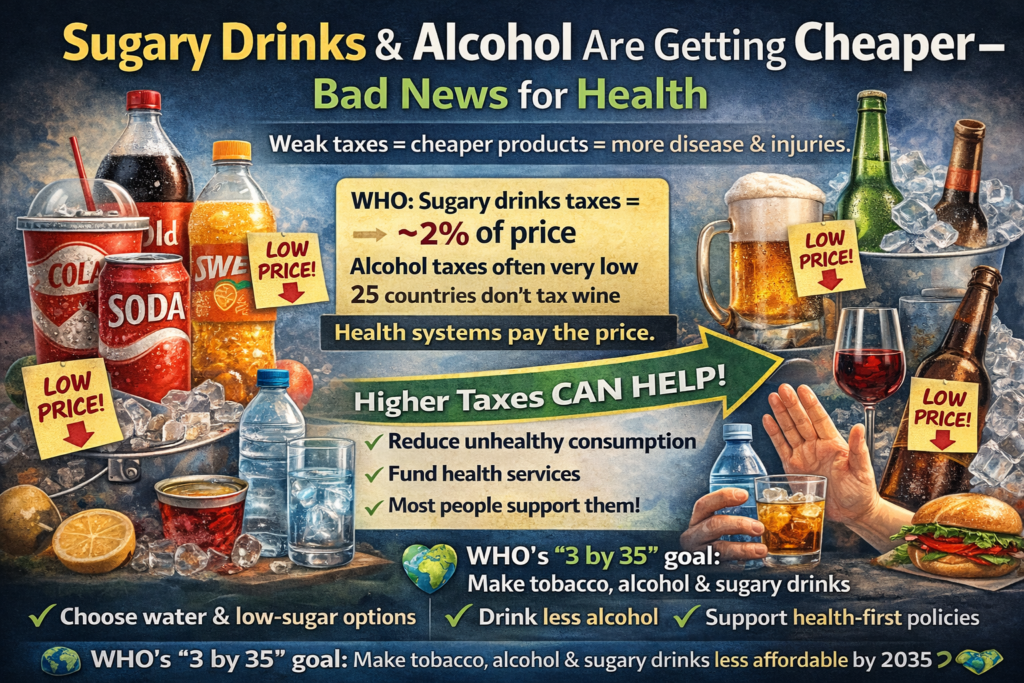
Sugary Drinks and Alcohol Are Getting Cheaper — A Growing Threat to Global Health
Sugary Drinks and Alcohol Are Getting Cheaper — A Growing Threat to Global Health
Across the world, sugary drinks and alcoholic beverages are becoming more affordable — and while this may seem harmless to consumers, it poses a serious and growing threat to public health. According to new global reports released by the World Health Organization (WHO), weak and outdated taxation policies are making unhealthy products cheaper than they should be, fueling a surge in non-communicable diseases and placing enormous pressure on health systems.
Why Lower Prices Are Dangerous
When sugary drinks and alcohol are inexpensive and easily accessible, consumption rises — especially among children, adolescents, and young adults. Scientific evidence consistently shows that higher consumption of these products is linked to:
- Obesity and overweight
- Type 2 diabetes
- Heart disease and stroke
- Certain cancers
- Liver disease
- Road traffic injuries and violence related to alcohol use
Young people are particularly vulnerable, as early exposure can shape lifelong habits and increase the risk of chronic illness later in life.
What the WHO Reports Reveal
WHO’s latest findings highlight a striking imbalance between corporate profits and public health protection:
- Sugary drink taxes often make up only around 2% of the retail price, far below levels shown to reduce consumption.
- Alcohol taxes in many countries remain very low and do not keep pace with inflation, making alcohol more affordable over time.
- Wine is not taxed at all in at least 25 countries, despite clear evidence of its health risks when consumed regularly or excessively.
While companies generate billions of dollars in profits, governments collect only a small fraction in health-related taxes — leaving health systems to absorb the long-term costs of treatment and care.
The Cost to Health Systems and Society
The true price of cheap sugary drinks and alcohol is paid by society. Hospitals and clinics face rising numbers of patients with preventable diseases, while governments spend vast sums on treatment, rehabilitation, and long-term care.
Beyond healthcare costs, there are wider social and economic impacts, including:
- Reduced productivity
- Increased absenteeism from work and school
- Higher rates of disability
- Greater strain on families and communities
The Good News: Health Taxes Work
There is strong global evidence that health taxes are one of the most effective tools to reduce harmful consumption. When prices rise:
- People buy and consume less
- Health outcomes improve
- Governments generate revenue that can be reinvested into healthcare, education, and prevention programs
Importantly, public support for these measures is higher than many policymakers expect. Surveys show that most people support higher taxes on sugary drinks and alcohol, especially when revenues are clearly used to improve health services.
What Individuals Can Do
While policy change is essential, individuals also play a vital role in protecting their own health and influencing broader change:
- Choose water and low-sugar beverages instead of sugary drinks
- Limit alcohol consumption or avoid it altogether
- Support public health policies that prioritize well-being over corporate profits
- Raise awareness within families and communities about the risks of these products
WHO’s “3 by 35” Goal
To address this global challenge, WHO has launched its ambitious “3 by 35” initiative, which aims to make tobacco, alcohol, and sugary drinks less affordable by the year 2035 through stronger taxation and pricing policies.
The goal is clear:
- Reduce preventable diseases
- Save lives
- Create healthier environments for future generations
A Call to Action
Cheap sugary drinks and alcohol may seem like a small issue, but their impact on global health is profound. Stronger health taxes are not about punishment — they are about protection, prevention, and progress.
By supporting evidence-based policies and making healthier choices, societies can move toward a future where people live longer, healthier lives — and health systems are strengthened rather than overwhelmed.