Healthy Food at School: Building Healthier Futures for Children Worldwide
Introduction
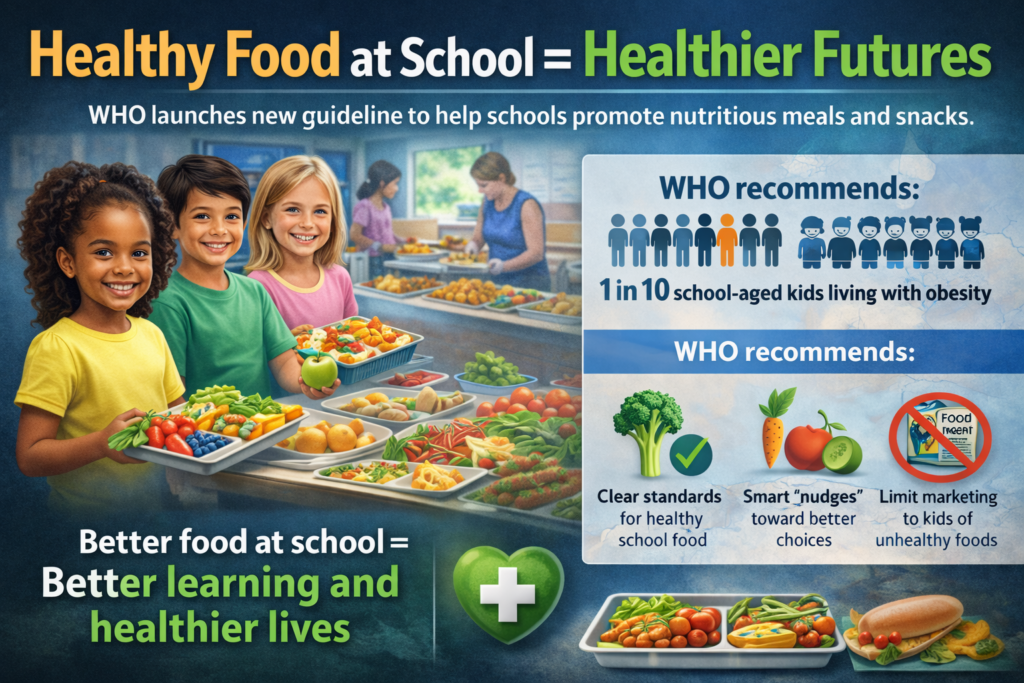
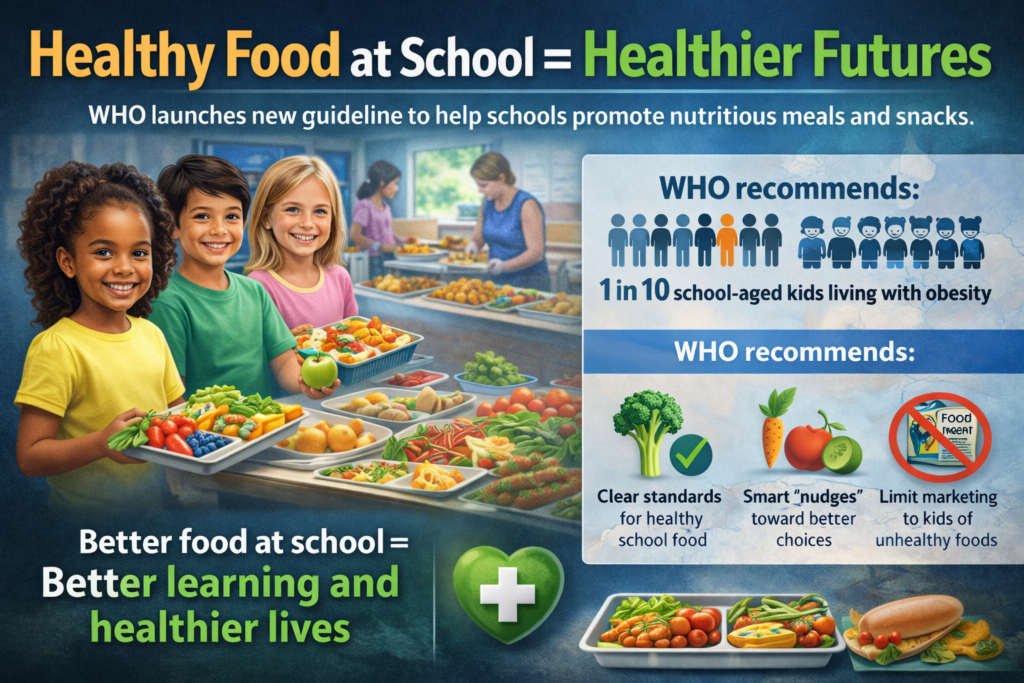
What children eat at school plays a critical role in shaping their lifelong health, learning ability, and overall well-being. Recognizing the growing global nutrition crisis among children and adolescents, the World Health Organization (WHO) has released a new global guideline aimed at helping countries create healthier school food environments—from cafeterias and vending machines to classrooms and school policies.
These guidelines come at a crucial time, as childhood obesity and poor dietary habits are rising rapidly across the world.
Why Healthy School Food Matters
Schools are more than places of learning; they are environments where children develop daily habits that often continue into adulthood. For millions of children, school meals are a major source of daily nutrition, making schools one of the most powerful settings for improving public health.
A Growing Global Concern
According to WHO data:
- In 2025, 1 in 10 school-aged children and adolescents worldwide—approximately 188 million children—were living with obesity.
- For the first time in history, the number of children with obesity has surpassed the number of children who are underweight globally.
- Every day, 466 million children receive meals through school feeding programs worldwide.
- Despite this reach, many school meals remain high in sugar, salt, and unhealthy fats, contributing to poor health outcomes.
This combination of widespread access and poor nutritional quality represents both a serious challenge and a major opportunity.
The Health Impact of Poor School Nutrition
Unhealthy diets during childhood are linked to:
- Obesity and overweight
- Type 2 diabetes
- High blood pressure
- Heart disease later in life
- Poor concentration and learning difficulties
- Increased absenteeism due to illness
Children who consume highly processed foods with excess sugar, salt, and unhealthy fats are more likely to experience long-term health problems that place pressure on families, health systems, and national economies.
WHO’s Whole-School Approach
To address these challenges, WHO recommends a “whole-school approach” to food and nutrition. This means improving not just meals, but the entire food environment children are exposed to at school.
1. Clear Nutrition Standards
WHO urges countries to:
- Set clear, science-based nutrition standards for all foods and drinks available in schools
- Ensure that healthy food becomes the easiest and most accessible choice for students
- Reduce the availability of foods high in sugar, salt, and unhealthy fats
2. Smart “Nudges” Toward Healthier Choices
Rather than relying only on rules, WHO highlights the power of behavioral nudges, such as:
- Better placement of healthy foods in cafeterias
- Affordable pricing for nutritious options
- Attractive presentation of fruits, vegetables, and balanced meals
Small changes in how food is offered can significantly influence children’s choices.
3. Limiting Marketing of Unhealthy Foods
Children are highly influenced by advertising. WHO recommends:
- Restricting the marketing and promotion of unhealthy foods and drinks in and around schools
- Preventing branding, sponsorships, or advertisements that encourage poor dietary habits
Protecting children from aggressive marketing helps them develop healthier preferences.
The Role of Schools in Learning and Health
Healthy nutrition is closely linked to better educational outcomes. Studies show that children who eat balanced, nutritious meals:
- Concentrate better in class
- Perform better academically
- Have improved memory and behavior
- Are more physically active and emotionally balanced
Healthy schools create an environment where children can learn better today and live healthier tomorrow.
What Parents, Communities, and Policymakers Can Do
WHO emphasizes that improving school food environments requires collective action.
Actions You Can Take
✅ Support policies that promote healthy school meals
✅ Encourage nutritious lunches and snacks at home
✅ Advocate for healthier food options in schools
✅ Engage with school administrations and parent groups
✅ Educate children about healthy eating habits
When families, schools, and governments work together, lasting change becomes possible.
Conclusion
The new WHO global guideline on school food environments highlights a simple but powerful truth:
Healthy food at school is an investment in healthier futures.
With millions of children relying on school meals every day, improving food quality in schools is one of the most effective ways to combat childhood obesity, improve learning outcomes, and build a healthier generation.
By creating supportive, nutritious, and protective school food environments, societies can help children grow, learn, and thrive—both now and in the years to come.